|
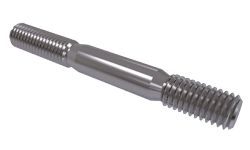
For threaded fasteners, we have adopted what we believe to be the common industry method of specifying a size: Diameter - t.p.i. x Length
We strip out all unnecessary characters and spaces, and format the size so that the information is consistent throughout the system.
To a computer, "3 / 4" is NOT the same as "3/4". "1/2 inch" is not the same as "1/2". Keep this in mind as you work with size information in the search engine.
Search Tips
- All dimensions are assumed to be in inches unless otherwise stated. Therefore, you don't need to include ", in, in., inches.
- If you need to describe metric sizes, M6, M9, M12 etc. work best, but 9mm, 12mm would be OK.
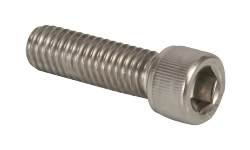
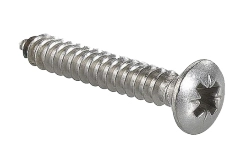
- For imperial (U.S.) size bolts, screws etc., we use the normally accepted method of describing size: diameter - t.p.i. x length. This is in the form 1/4-20 x 1 1/2 or #8-24 x 1 1/4
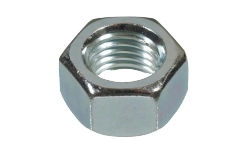
- For metric bolts, screws, nuts etc., we have adopted the common North American method of describing size: diameter - pitch x length.
This is NOT the standard method ( diameter x pitch x length) Examples:M8 x 30, M8-1.25, M6-1.00 x 25 NOT: M6 x 1.00 x 25
- Except for metric fasteners, decimals are rarely used for nuts, screws, and bolts.
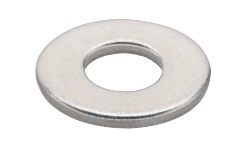
- For washers, the normal method of entering size is inside diameter, outside diameter, and thickness. This is in the form 3/16 x 9/16 x 1/16
- Washers are sometimes specified using decimals .233 x .371 x .010, so check both .250 and 1/4
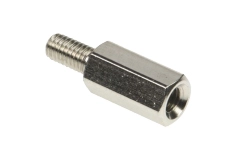
- There doesn't seem to be any standard method of specifying the size of a spacer or stand-off.
|
 |